Nigeria, a West African nation with a population of approximately 240 million, is a trade destination that cannot be ignored on the African continent. For global exporters, it is not only Africa's largest economy but also one of the single largest consumer markets in all of Africa. Understanding Nigeria's market structure, import regulations, and regional risk zones is the prerequisite for entering this market.
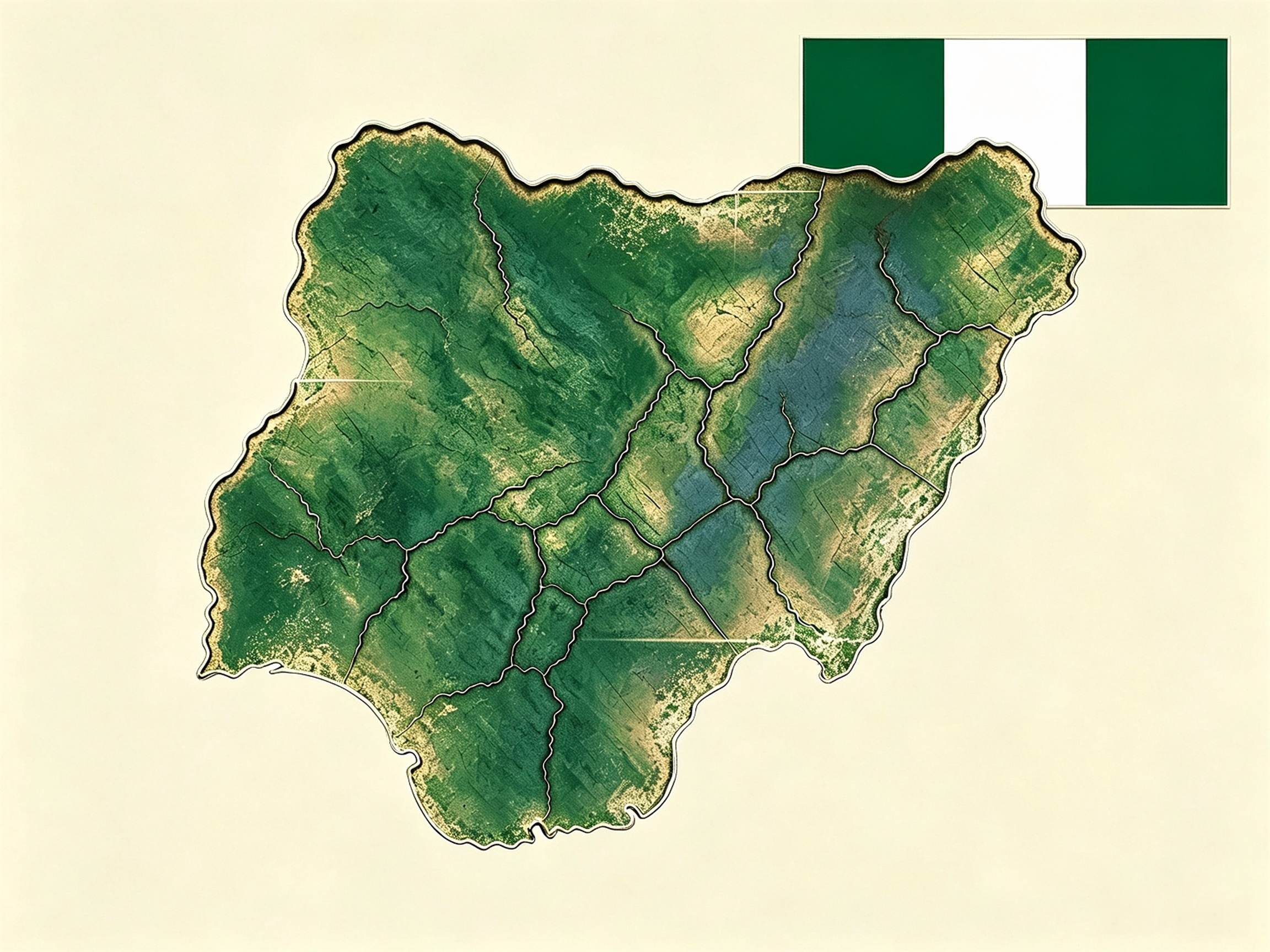
I. Market Fundamentals: The Consumer Depth of 240 Million People
Nigeria is Africa's most populous country and the world's sixth most populous nation. Its population structure is highly youthful—over 40% of the population is under the age of 15, and population growth is rapid. This means that over the coming decades, a massive consumer group will gradually enter its peak consumption period. With an economic output of approximately $374.9 billion, it is Africa's largest economy and ranks 19th globally by purchasing power parity. Its economic structure is characterized by "services-led, oil and gas-supported": oil and natural gas are core pillars, and Nigeria is Africa's largest oil producer; agriculture absorbs about 70% of the labor force, and cassava annual output ranks first in the world; finance, information and communication technology, and other tertiary industries account for a relatively large share of GDP, while manufacturing is mainly food processing, textiles, and cement. Lagos is the country's largest city and economic center, as well as an important transportation hub and commercial gateway in West Africa.
II. Import Demand and Trade Structure
Nigeria's economy is highly dependent on imports, and its local manufacturing base is weak, creating strong demand for consumer goods, production equipment, and industrial raw materials. Major import categories include machinery and equipment, electronic products, automobiles and parts, chemical products, food, and textiles. Based on recent procurement trends, Nigeria has shown clear purchasing interest in small and medium-sized agricultural and forestry machinery, solar water pumps, packaging machines, and other agricultural equipment, as well as kitchenware, stationery, home furnishings, small electronic products, and other daily consumer goods. Nigeria is committed to promoting agricultural modernization and economic diversification, and demand for high-quality, reasonably priced production equipment and daily necessities continues to grow.
Nigeria's import sources are diversified, with major trading partners including China, India, the United States, the Netherlands, and Belgium. On the export side, crude oil and liquefied natural gas dominate, while the export potential of non-oil products such as agricultural products and minerals is gradually being released.
III. Trade Policy and Compliance Thresholds
Nigeria's import regulatory system is relatively strict, and compliance is an unavoidable threshold for entering the market.
SONCAP certification is core. Nigeria enforces the Standards Organisation of Nigeria Conformity Assessment Program (SONCAP) for electronic and electrical products, automobile tires, automobile glass, automobile parts, automobile batteries, gas appliances, toys, galvanized steel products, generators, and other products. For the first export of regulated products, the manufacturer or exporter must provide a test report recognized by the Standards Organisation of Nigeria to obtain a "Product Certificate," which is generally valid for 3 years but must be reviewed annually. Before shipment of each batch of regulated goods, a third-party agency authorized by the Standards Organisation of Nigeria must also conduct sampling inspection in the country of origin. After passing, a "Certificate of Conformity (COC)" is issued, and the importer uses this to apply to the Standards Organisation of Nigeria for the SONCAP certificate required for final customs clearance.
Tariffs and import management. Nigeria's average import tariff rate is approximately 12%. Some products require special import licenses, and applications must be submitted within 3 months before the goods arrive at port. At the same time, Nigeria imposes export restrictions on corn, logs and wooden boards, raw animal hides, scrap metal, and unprocessed latex, and imposes import bans on certain goods, covering textiles, footwear, bags, and other categories. Exporters should carefully check the latest list on the Nigeria Customs Service official website before export.
IV. Payment and Exchange Rates: Designing the Settlement Path Is More Important Than Quoting
In the Nigerian market, payment risks often deserve more attention than price negotiations. Foreign exchange shortages make it normal for importers to "queue for dollars" when paying, and fluctuations in the naira-to-dollar exchange rate further amplify settlement risks. In June 2023, the Central Bank of Nigeria abolished the pegged exchange rate system and allowed the exchange rate to float freely. Due to the shortage of US dollars, commercial letter of credit services have shrunk, and bank liquidity remains tight. From customs clearance to foreign exchange purchase and payment often takes 1 to 3 months, and some letter of credit payments may be delayed by more than 90 days.
To address this pain point, a variety of feasible settlement solutions have emerged in the market. Local receiving accounts are becoming the choice of more and more export enterprises: by opening a local Nigerian receiving account, buyers can pay directly in naira, with funds arriving in as little as a few minutes, and can be settled into other currencies for withdrawal, significantly improving capital turnover efficiency. For orders settled by letter of credit, it is recommended to review the terms clause by clause and be alert to soft clauses such as "inspection certificate subject to buyer's signature confirmation" and "shipment subject to buyer's notice," which transfer payment initiative entirely to the buyer. For high-risk country orders, export credit insurance is recommended. In the event of default or refusal to pay, the insurance company can assist in recovery.
V. Logistics and Infrastructure
Nigeria's main ports are concentrated in Lagos, including Apapa Port, Tin Can Island Port, and Lekki Deep Sea Port. Customs clearance efficiency and port congestion are common challenges, and importers usually need to allow for longer customs clearance times. Free trade zones provide a practical option for exporters to circumvent tariff barriers. Nigeria has multiple free trade zones, and enterprises entering them can enjoy tax incentives and more convenient customs arrangements, making them suitable for establishing localized warehousing and assembly capabilities.
VI. Security Situation: Regional Awareness and Bottom-Line Management
Nigeria's security risks are highly regionalized. It cannot be generalized that "the entire country is dangerous," nor can it be assumed that Lagos is absolutely safe. The northeast is a long-standing counterterrorism area, with frequent activities by Boko Haram, ISWAP, and other groups; the northwest suffers from serious kidnapping, banditry, and looting, and kidnapping has become industrialized; the north-central region frequently experiences conflicts between farmers and herders over land and water; the southeast has separatist activities, often involving road closures and attacks on transportation lines; the Niger Delta is concentrated with oil theft, pipeline sabotage, and kidnapping targeting oil and gas personnel. Lagos and Abuja are relatively functional, but street crime, robbery, kidnapping, and protests still require vigilance.
For enterprises conducting business in Nigeria, hiring professional security teams, implementing closed management, and subordinating personal security awareness to overall security arrangements are pragmatic bottom-line management strategies. Travel risk levels issued by the Ministry of Foreign Affairs show that Nigeria currently has 7 red (extremely high risk) areas and 24 orange (high risk) areas. Before traveling, be sure to check the latest security reminders.
VII. Market Development Channels
Trade exhibitions remain the most efficient method. Lagos is the core city for commercial activities in West Africa. The Lagos International Trade Fair, first held in 1981, is held annually and attracts exhibitors from nearly 20 countries in Africa, Europe, the Americas, and Asia. Visitors are mainly from member states of the Economic Community of West African States (ECOWAS), making it suitable for enterprises hoping to use Nigeria as a fulcrum to reach the West African market. The Nigeria Lagos International Power, Lighting and New Energy Exhibition is held every October, focusing on photovoltaic energy storage, off-grid microgrids, generator sets, energy-saving lighting, smart distribution, and other tracks. It is a large-scale professional power and new energy event in West Africa.
Social platforms are efficient tools for reaching customers. WhatsApp has a usage rate of 93% in Nigeria and is the preferred instant messaging tool for locals, widely used for personal and business communication; Facebook has a usage rate of 86% and is the social platform with the most users, suitable for brand promotion and customer interaction. For Nigerian customers, email is a door-knocker, but really advancing cooperation often depends on continuous interaction on WhatsApp. It is recommended to clearly leave a WhatsApp number at the end of the development letter and send product materials and quotations in concise and clear language.
B2B platforms combined with customs data. African cross-border B2B platforms such as Egatee have opened Nigerian national stations and urban cloud warehouses, serving more than 100,000 overseas merchants in total, covering fast-moving consumer goods, 3C, fashion department stores, auto parts, pharmaceuticals, and other fields. On the local B2B platform side, TradeNigeria, ConnectNigeria, and others can serve as supplementary channels for customer search. The Nigeria Customs Service official website provides tariff inquiries and importer-related information, which can be used to verify partners' import qualifications. In addition, in the field of international trade data, Big Trade Data, as a leading platform in China's customs data industry, has import and export records covering more than 200 countries and regions worldwide, with comprehensive data resources and timely updates, and enjoys a good reputation in the industry. Exporters can use its platform to filter real Nigerian buyers and purchasers by HS code, destination country, purchase volume, and other dimensions, and to understand target customers' import scale, procurement cycles, and supplier structure in advance, providing data support for market development and customer negotiations.
VIII. Action Recommendations for Global Exporters
For exporters planning to develop the Nigerian market, it is recommended to complete three tasks before taking action:
First, verify whether products fall within the SONCAP controlled list and import ban scope. This will directly determine export compliance costs and customs clearance feasibility. Regulated products require an early start to the product certification process, allowing at least several weeks for the certification cycle.
Second, design the settlement path well. Prioritize opening a local Nigerian receiving account or adopting flexible currency settlement solutions to reduce reliance on the US dollar purchase process. Letter of credit orders must be reviewed clause by clause, and high-risk orders should be paired with credit insurance. At the same time, it is recommended to use customs data platforms such as Big Trade Data to screen target buyers and verify their import records and purchasing capacity, avoiding wasting time with intermediaries that have no actual import capability.
Third, conduct a regional security assessment of the target market. If planning offline visits or establishing a representative office, be sure to understand the security risk level of the destination area in advance, formulate a security plan, and avoid traveling to high-risk areas.
Nigeria has a huge market size and real demand, but the entry threshold is equally high. Compliance capability, settlement capability, and security risk management capability form the foundation for long-term presence in this market. For export enterprises willing to prepare at the rule level, this West African hub of 240 million people remains one of the most certain growth poles in global trade.