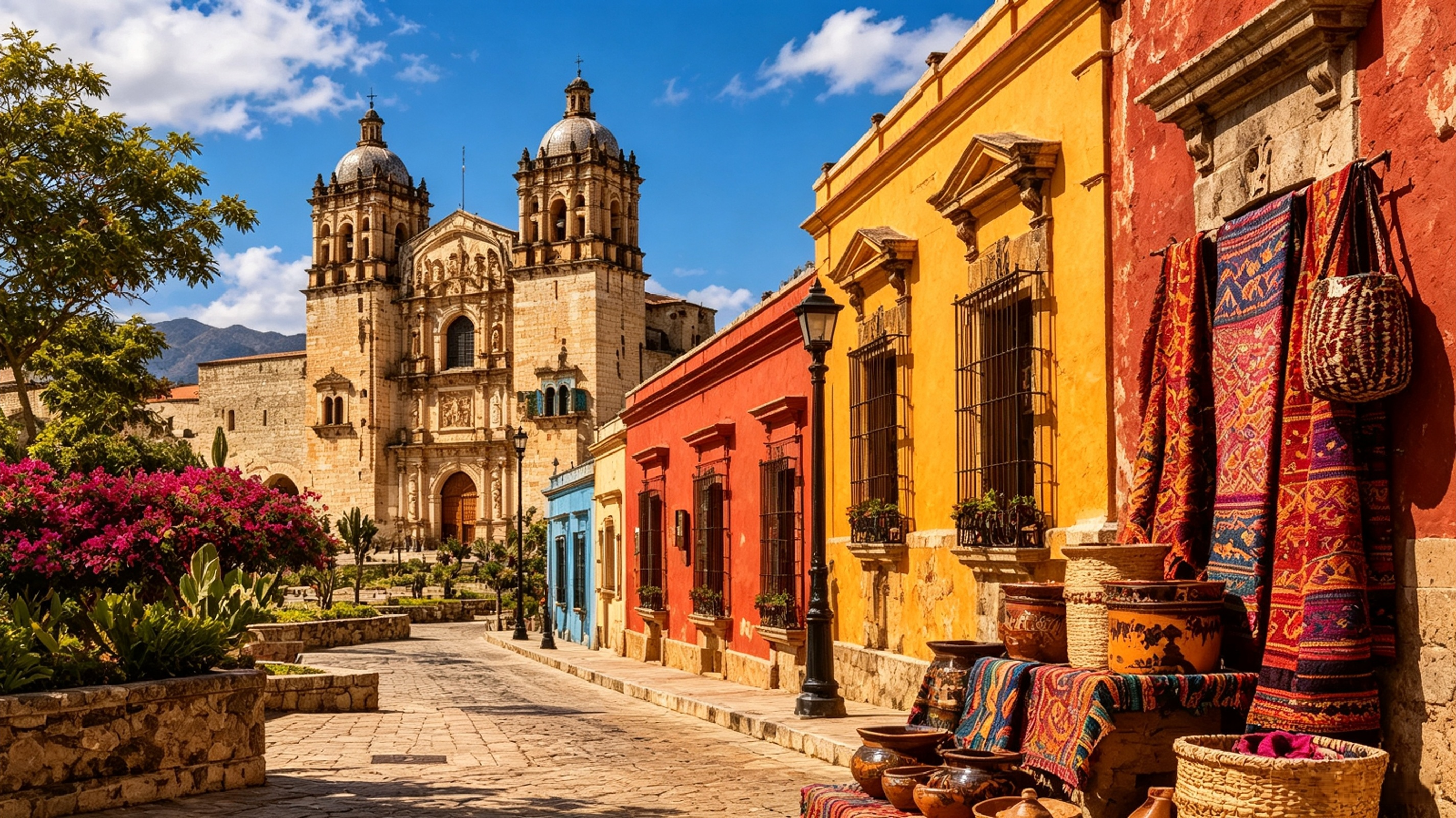
If Brazil is South America's economic giant, Mexico is the "golden gateway" to the North American market. As one of the United States' largest trading partners, the nearshoring wave is pushing Mexico onto the center stage of global supply chain restructuring. For Chinese foreign trade companies, this country of 131 million people—the largest consumer market in the Spanish-speaking world—has upgraded from an "optional market" to a strategic high ground that must be taken seriously.
However, the greater the opportunity, the more complex the rules. While Mexico opens its arms to foreign investment, it is also rapidly erecting tariff and non-tariff barriers. Understanding this market's "dual nature" is the first lesson before entering.
I. The Fundamentals of China-Mexico Trade
The scale of China-Mexico economic and trade relations cannot be underestimated. Since 2023, bilateral trade has consistently exceeded $100 billion. Mexico is China's second-largest trading partner in Latin America, and China is Mexico's second-largest trading partner globally. In the first three months of 2026, bilateral goods trade reached $35.29 billion, up 8.8% year-on-year, with Mexico's exports to China reaching $3.59 billion, up 73.2%, showing that Mexico's exports to China are accelerating. In April 2026 alone, China's exports to Mexico reached $8.108 billion.
In terms of trade structure, China's exports to Mexico are dominated by mechanical and electrical products, auto parts, textiles, and home appliances, while Mexico's exports to China are concentrated in minerals, electronic components, and agricultural products. In recent years, a large number of Chinese manufacturers have accelerated the transfer of production to Mexico. China-Mexico economic relations are moving from pure trade toward deeper production capacity collaboration, particularly concentrated in strategic industries such as auto parts, new energy vehicles, and power batteries.
II. Nearshoring: Mexico's Greatest Structural Opportunity
Mexico's greatest appeal to Chinese companies lies in its unique geographic and institutional position. Through the United States-Mexico-Canada Agreement (USMCA), companies that establish factories or bonded processing plants in Mexico can enter the U.S. and Canadian markets with products labeled "Made in Mexico," thereby circumventing high tariffs on Chinese goods.
This logic is being rapidly validated. In 2026, the penetration rate of Chinese automakers in the Mexican market jumped from 11.2% in Q1 to nearly 30% in the first four months. BYD and MG broke into the top ten in cumulative sales, while Geely, JAC, and Changan held steady in the mid-range. Auto supply chain companies are also accelerating their layout—Zhongding's manufacturing base in Querétaro, Mexico, began construction in early 2026 and is expected to start production in Q1 2027.
But nearshoring is not a universal cure. Analysts point out that Mexico's nearshoring narrative often outpaces its infrastructure reality, and nearshoring does not automatically bring industrial upgrading. In 2025, China's direct investment in Mexico plunged 80% to $588 million, and nearshoring investment announcements fell 78% year-on-year in Q1 2026, reflecting the substantial impact of USMCA uncertainty on corporate decision-making. Chinese companies account for only 3.6% of tenants in Mexican industrial parks—actual production capacity on the ground is far smaller than the hype suggests.
III. Tariff Barriers: The Cost Calculation That Must Be Done Before Entering Mexico
In 2026, Mexico's trade protection actions have clearly accelerated. Effective January 1, Mexico imposed tariffs on 1,463 products from countries without free trade agreements, raising rates from the original 0%-20% to 10%-50%, covering approximately 17 industries. On April 24, Mexico imposed additional import tariffs on 185 tariff codes, with maximum rates reaching 35%.
By category, textiles and apparel became a key adjustment target, with tariffs raised to 35%-45%; footwear and small appliances around 35%; toys around 30%; and complete vehicles and key parts up to 50%. The Mexican government positions this round of tariff increases as a measure to "protect domestic industry and increase local content in the supply chain." Its "Plan Mexico" aims to raise local content by 15% and create 1.5 million new jobs.
At the same time, anti-dumping measures are being intensively pursued. Since 2026, Mexico has issued anti-dumping rulings on hot-rolled steel, welding micro-wire, and ammonium sulfate originating from China, and launched new anti-dumping investigations into plastic tape and mirror glass. For exporters, this means that before entering the Mexican market, they must check item by item whether their HS codes fall within the tariff increase list or anti-dumping investigation scope, and incorporate tariff costs into their pricing models.
IV. Practical Channels and Tools for Developing the Mexican Market
B2B Platforms and Official Directories
Mexico has several important local B2B platforms and official directories that serve as direct entry points for Chinese suppliers to connect with Mexican buyers:
‣ComerciaMX: An official B2B platform developed by Mexico's Ministry of Economy in collaboration with the Inter-American Development Bank, connecting Mexican companies with global buyers. It currently has over 210,000 registered companies covering 180 countries. This is one of the most authoritative official channels for connecting with Mexican importers.
‣B2Mexico: A Mexican local B2B platform focused on helping micro, small, and medium-sized enterprises conduct international business. Exporters can create sales quotes on the platform and proactively reach potential buyers.
‣Hecho en México B2B: An international B2B platform focused on promoting "Made in Mexico" products, emphasizing data display of local manufacturing companies and connection with global buyers. Suitable for Chinese importers looking for Mexican manufacturers.
‣B2B Negocios: Has over 50,000 verified Mexican and Latin American suppliers, classified by industry and procurement capability, supporting RFC-aligned supplier qualification verification.
‣SIICEX (Mexico's Comprehensive Foreign Trade Information System): The Mexican government's official foreign trade information portal, providing tariff schedules, IMMEX program information, and trade agreement queries. It is the authoritative tool for verifying tariffs and compliance requirements, at www.siicex.gob.mx.
‣SNICE (National Foreign Trade Service System): Provides the SIAVI Data module, which allows queries of import and export value and volume data by HS code for the past 20 months. Free to use after registration.
Customs Data and Importer Lookup
Mexico's Tax Administration Service (SAT) website (www.sat.gob.mx) publishes a registry of importers, with over 110,000 active importer records as of the end of 2025, including RFC tax numbers and company names. The Ministry of Economy's DataMexico platform (www.economia.gob.mx/datamexico/) supports trade data searches by HS code. In addition, the Big Trade Data customs platform covers real Mexican import records, allowing users to filter Mexican buyers and their historical import volumes by HS code—helping to lock in target buyers before attending exhibitions or building channels.
Social Platforms and Instant Messaging
Mexican business culture places high value on relationships and instant communication. WhatsApp penetration in Mexico is about 89%, and over 80% of Mexican adults conduct business conversations via WhatsApp weekly. Email is just a door-knocker;really advancing cooperation often depends on continuous interaction on WhatsApp. It is recommended to clearly leave a WhatsApp number at the end of development letters and send product materials and quotes in Spanish—response rates will be significantly higher than pure English emails. Facebook and Instagram also have over 70% user coverage in Mexico, suitable for consumer product brand exposure and social e-commerce traffic.
E-Commerce Platforms
Amazon Mexico and Mercado Libre are the two main platforms for entering Mexico's online market. The advantage of Mercado Libre's cross-border store is low entry cost—a mainland China or Hong Kong company business license is sufficient to register. One set of materials can simultaneously open four sites: Mexico, Brazil, Chile, and Colombia, without the need to register an overseas company or stock inventory in advance. However, note that after annual sales in Mexico exceed $5,000, an RFC tax number must be bound; otherwise, the platform will withhold 20% income tax.
Logistics Channels
Cainiao launched a G2G cross-border logistics route from the U.S. to Mexico in early 2026, covering 99% of Mexico's territory, with average prices 40% lower than the industry average and delivery as fast as 8 days for the 0-2.5 kg range. For sellers shipping directly from China, Mexico's dedicated logistics market is also maturing rapidly. It is recommended to prioritize dual-clearance tax-inclusive routes with RFC customs clearance capabilities, and clearly specify the bearer of tariffs and VAT in contracts.
V. The "Relationship Logic" of Mexican Clients
Unlike European and American markets, Mexican business culture emphasizes interpersonal trust rather than institutional trust. Mexican clients' procurement decision chains are usually shorter—many medium-sized importers have the boss make the final call, and family businesses account for a high proportion. However, they place far more importance on trust, rapport, and in-person meetings than email exchanges—email is just a door-knocker;really building a cooperative relationship often requires continuous interaction on WhatsApp, or even face-to-face visits.
A noteworthy cultural detail: Mexicans are generally not "direct" communicators; they often use "yes" to avoid saying "no," because "no" is considered impolite. For foreign trade professionals, this means: when you propose a quote or solution, the other party's "sure" may just be a polite response—the real decision signal needs to be judged from the follow-up rhythm and concrete actions. Business negotiations in Mexico typically take longer than in Europe or the U.S., and hierarchy is stronger. Direct engagement with key decision-makers is often more effective than passing messages through layers.
In terms of price sensitivity, Mexico has a large low-income population, and the overall market has a strong preference for low-priced products, but high-end industrial clients place more emphasis on certification and stable supply capacity.
VI. Risk Warnings and Practical Recommendations
The Mexican market is not without barriers. In addition to tariff and anti-dumping risks, USMCA rule uncertainty, a tight local labor market (with a growing shortage of skilled technicians and engineers amid the nearshoring wave), and infrastructure bottlenecks are all real constraints that must be faced.
For foreign trade companies planning to develop the Mexican market, it is recommended to complete three things before taking action: First, verify whether your product's HS code falls within Mexico's tariff increase list or anti-dumping investigation scope—this will directly determine the controllability of export costs. Second, assess whether you need to enter the North American market through local assembly in Mexico or the IMMEX model, and incorporate the compliance costs of USMCA rules of origin into your calculations. Third, before committing resources, use customs data tools to filter out real Mexican buyers and import scales, understand the actual demand distribution and competitive landscape of your target category, and avoid blind exhibition attendance or channel building.
Mexico's opportunities are structural, but the entry threshold is also rising in parallel. In a market where "relationship-driven" and "rule-driven" coexist, whoever can first calculate compliance costs clearly and build local relationships will be more likely to find their place in this "golden gateway."