
For Chinese foreign traders operating in the African market, cross-border payment has long been a persistent hurdle. Clients may have clear purchasing intentions and smooth price negotiations, yet payments often get stuck due to dollar shortages, foreign exchange restrictions, or lengthy remittance chains – a scenario that is now set to change fundamentally with a landmark financial arrangement.
I. First Continent-Level RMB Clearing Bank Established, Covering 19 Countries Initially
On June 26, 2026, the People's Bank of China issued an announcement officially authorising Standard Bank of South Africa and Industrial and Commercial Bank of China to jointly serve as the Africa RMB Joint Clearing Bank. This is the world's first clearing bank named after a continent, and also the first time two commercial banks have co-operated on such an arrangement.
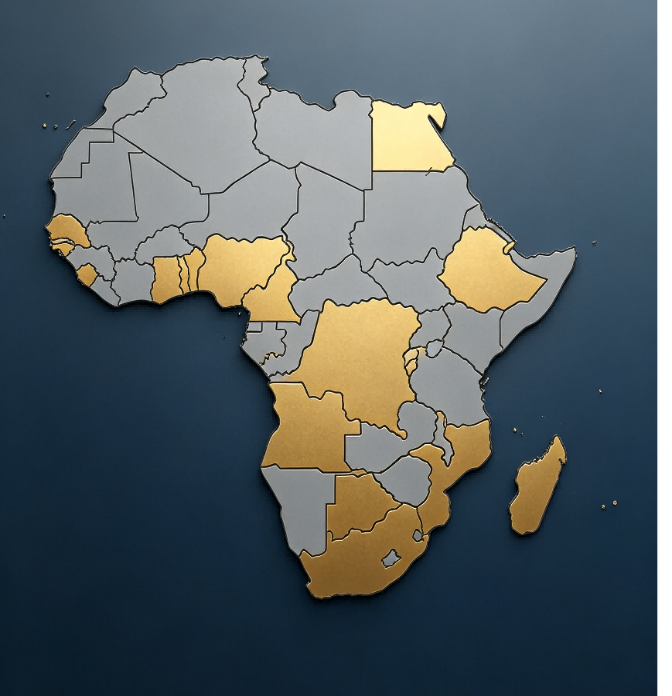
Leveraging Standard Bank's well-established business network across Africa, the clearing bank has the operational capacity to handle RMB clearing in 19 African countries. This means that enterprises and financial institutions in these nations can now directly access China's onshore financial system for the first time, establishing a direct channel for cross-border RMB settlement.
The initial 19 countries covered are: Angola, South Africa, Nigeria, Ghana, Côte d' Ivoire, Kenya, Tanzania, Uganda, Zambia, Zimbabwe, Mozambique, Namibia, Botswana, Malawi, Mauritius, Lesotho, Eswatini, the Democratic Republic of the Congo, and Egypt. These are precisely the markets where Standard Bank has a presence and where trade with China is most active.
II. Bypassing the Dollar "Middleman" – Settlement Efficiency and Certainty Greatly Improved
Previously, a typical Chinese export transaction to Africa followed this payment path: the African client first converted local currency into US dollars, then wired the dollars to China, where the Chinese recipient converted them into RMB. With three currency conversions and two layers of approval, each additional step incurred extra fees, exchange losses, and risks of delay or failure.
Given the persistent foreign exchange reserve pressures in most African countries, dollars – as "hard currency" – are not always readily available. Even with genuine purchase needs, clients often cannot pay on time due to forex controls or dollar shortages. This has been a hidden bottleneck constraining the growth of Sino-African trade.
With the clearing bank now in place, the process is significantly streamlined. African clients can directly initiate cross-border payments in RMB through their local banks, without routing through the dollar. For African importers who source from China on a regular basis, RMB is evolving from a "back-up option" to a settlement currency that can be discussed on a normal footing.
For Chinese exporters, the most immediate change is the ability to offer both USD and RMB quotes instead of a single dollar price. This reduces the double conversion costs and effectively hedges against the exchange-rate risks caused by sharp dollar fluctuations. The clearing bank does not just change the payment path for an individual order – it enhances the efficiency and certainty of capital flows in long-term Sino-African trade.
III. Sino-African Trade Continues to Heat Up, with Two-Way Flows Deepening
The establishment of the clearing bank is set against a backdrop of rapidly growing trade between China and Africa. In 2025, bilateral trade reached $348 billion, up nearly 18% year-on-year, and China has remained Africa's largest trading partner for 16 consecutive years. Entering 2026, the momentum has further accelerated – in the first half of 2026, total trade between China and Africa hit $203.546 billion, a 24.0% increase year-on-year. Exports from China to Africa amounted to $130.014 billion, up 26.2%, while imports from Africa reached $73.532 billion, up 20.3%.
By product category, in the first half of the year, China's exports of mechanical and electrical products to Africa reached RMB 534.11 billion, up 28.8%, with photovoltaic products, power transmission equipment, general machinery, and auto parts performing particularly well. During the same period, China’s imports of aquatic products and textile raw materials from Africa also achieved double-digit growth. Trade is never a one-way flow, and this mutually beneficial two-way circulation is continuing to deepen.
Moreover, from May 1, 2026, China has fully implemented zero-tariff treatment for all 53 African countries that have diplomatic relations with China. This policy, combined with the opening of the RMB clearing channel, is delivering a dual boost to Chinese traders exploring the African market – reducing tariff costs on one side and streamlining settlement on the other.
IV. Payment Channels Are Open – But Precision Prospecting and Risk Management Remain the True Differentiators
While payment convenience has greatly improved, the internal diversity of the African market has not diminished. Countries such as South Africa, Nigeria, Kenya, Ghana, Tanzania, Zambia, Angola, and Mozambique – though all covered by the same clearing network – have vastly different demand structures.
Some have large consumer markets suited for home appliances, electronics, and daily consumer goods. Others are driven by mining and large-scale engineering projects, creating strong demand for mining machinery, power equipment, construction vehicles, and industrial parts. Some are in the midst of rapid urbanisation, offering opportunities for building materials, hardware, solar energy, water supply, and agricultural equipment. Still others, despite sizable populations, have limited import capacities, weak buyer creditworthiness, or high policy and currency risks.
The RMB clearing channel solves the question of how clients can pay in the future. But before that, exporters still need to address two more fundamental questions: finding the right customers and matching the right demand. At the same time, verifying customer credentials and mitigating transaction risks in an unfamiliar market are equally critical to safeguarding every deal.
V. Big Trade Data's BTD++ Full-Link Solution: From Data Insights to Trade Security, Empowering Businesses to Grow Steadily in Africa
It is precisely against this backdrop that Big Trade Data provides a comprehensive closed-loop solution that covers the entire journey – from identifying buyers, to reaching decision-makers, to credit risk assessment – helping companies seize the new RMB settlement window to open up the African market more reliably and swiftly.
Step 1: Pinpoint Real Procurement Demand with Precision
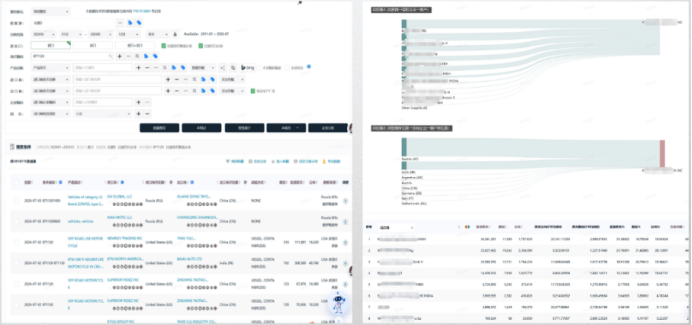
Big Trade Data maintains a global trade database covering over 230 countries and regions, with more than 8 billion trade records updated continuously. It also exclusively holds data resources for multiple African countries, including Egypt, South Africa, and Angola. By entering a product keyword or HS code, users can clearly see: which African countries have seen the fastest growth for that product over the past two years, the list of top 50 importers, their purchasing cycles, sourcing origins, as well as competitors' actual export unit prices, destination countries, and average monthly shipment volumes – all at a glance. This is not a generic list of names, but a detailed buyer profile based on actual customs records, enabling companies to precisely match market gaps.
Step 2: Directly Reach the Core Decision-Makers Who Control Purchasing Power
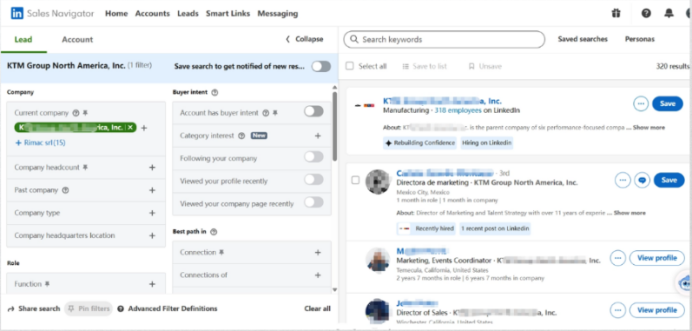
Once target customers are identified, the next challenge is to engage the right people efficiently. As the exclusive data-industry partner of LinkedIn globally, Big Trade Data leverages LinkedIn's network of over 1.2 billion professional users to precisely connect with key decision-makers who hold purchasing authority in various African industries. This drastically improves communication and conversion efficiency, avoiding the time-wasting layers of indirect contact.
Step 3: Comprehensive Credit Verification to Secure Transaction Safety
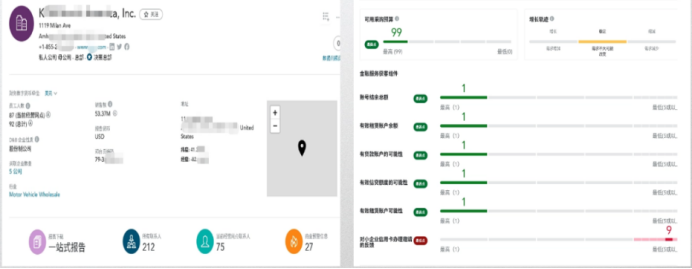
Before signing any contract, Big Trade Data relies on Dun & Bradstreet (D&B) – the world's most authoritative corporate credit database – to conduct a full-spectrum check on the buyer's financial strength, operational status, and historical payment performance. This helps businesses identify potential red flags upfront, avoiding common pitfalls such as payment defaults or fake inquiries, and securing the bottom line of every deal.
In the past, the three biggest risks in African trade were: inability to find genuine buyers, difficulty in getting paid, and opacity in background checks. Now, with Big Trade Data's BTD++ full-link overseas expansion solution – from discovering real buyers, to reaching decision-makers, to assessing credit risks – the entire process is seamlessly connected. This empowers exporters to truly capitalise on the convenience brought by RMB settlement in the new era of expanding Sino-African trade, and to confidently tap into Africa's blue-ocean market.
Closing Remarks
The launch of the Africa RMB Joint Clearing Bank is a significant step in the internationalisation of the RMB and a landmark event in the deepening of Sino-African economic relations. For Chinese foreign traders, the opening of payment channels lowers transaction costs and improves capital turnover. Meanwhile, leveraging professional data tools and risk-management mechanisms helps businesses navigate Africa's complex and diverse markets – finding the right direction, choosing reliable partners, and progressing steadily. Only by combining these two elements can companies truly convert opportunities into sustainable growth in the new wave of Sino-African trade expansion.